

Your shopping cart is empty!
Shop by Brands
- Adventure Audio
- BIGBENDS
- Bonding Solutions
- Burkey Flatliner
- Catalinbread
- Chase Bliss Audio
- Cmatmods
- death by audio
- Dirty Boy
- Earthquaker Devices
- Emerson
- Epigaze Audio
- Framptone
- GOTHAM
- JHS
- JHS Mods
- KEELEY Electronics
- KEELEY Mods
- KS Aji
- Lava Cable
- Lovepedal
- SolidGold FX
- Stone Deaf FX
- Walrus
- Wampler
Shop by Pedals
- Arpeggiator
- Bass Pedals
- Boost
- Buffer
- Chorus
- Compressor
- Delay
- Distortion
- EQ
- Foot Switch
- Fuzz
- Looper
- Octave
- Overdrive
- Phaser
- Pitch Shift
- Reverb
- Synthesizer
- Tremolo
- Univibe
- Vibrato
- Volume
- Wah
- >>Collector's Corner<<
Shop By ACCESSORIES
OTHER SERVICES
ACCEPTED PAYMENTS
JOIN OUR NEWSLETTER!
-


 Availability: In Stock
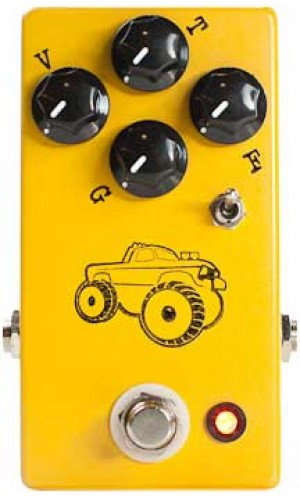
Fuzz 4 Wheeler
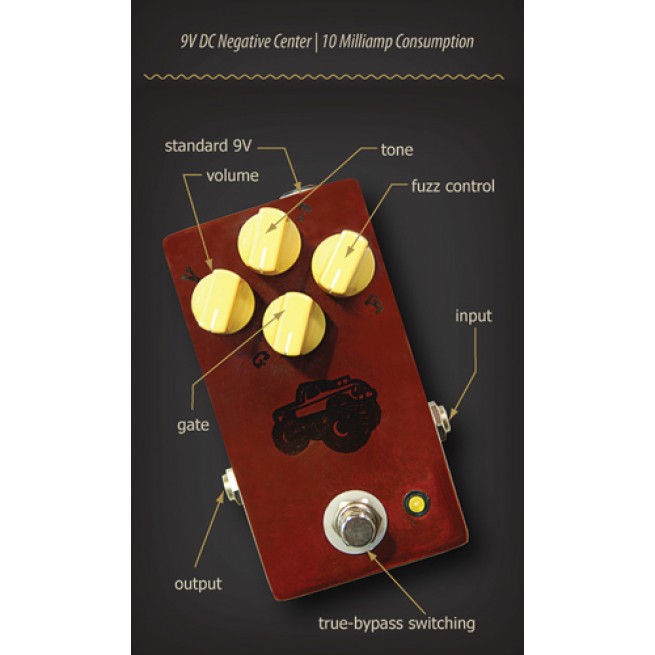
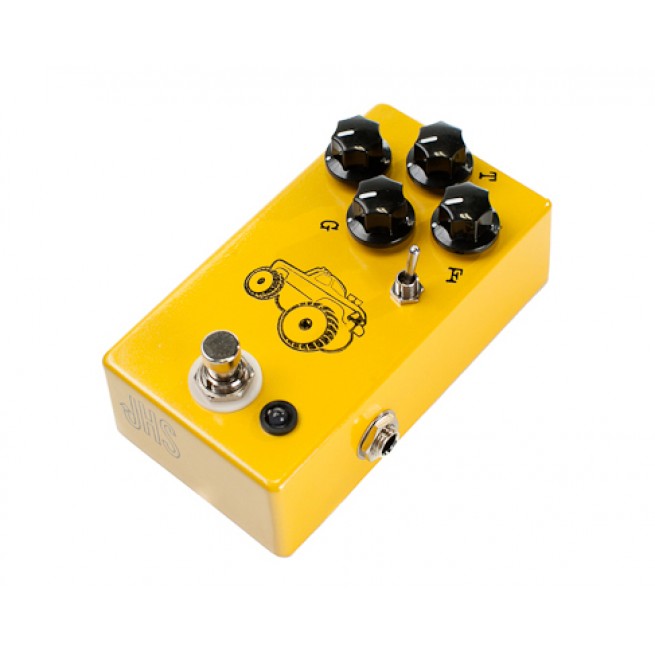
Bass fuzz has to be the sweetest thing ever. There is nothing like a tight bass line with fuzz driving it home. Our 4 Wheeler V2 will give you the ability to do everything from 60’s jam band to modern electronic fuzz. With Volume, Tone, Fuzz and a specially tuned Gate control, the ability to tweak away is at your fingertips. There is enough volume/headroom to shake any stage as well as drive your amp as hard as you would ever need. The tone and fuzz controls are super flexible with usable sweeps all the way around while the gate control can give you those much desired synth break-offs or just the right amount of jab for that perfect riff. The "deep" switch lets you go from a deeper more low end focused range of tones to the normal V1 settings.
Bass players are raving about it and guitar players even seem to love what it does to their tone so this may be the fuzz to fit the bill...
-
 Availability: Pre-Order
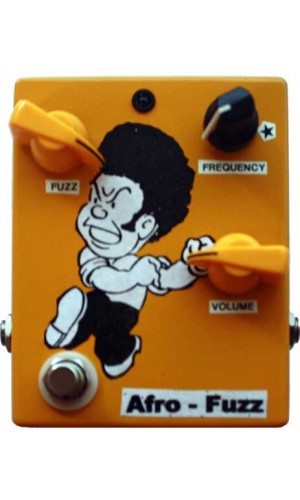
Fuzz Afro Fuzz
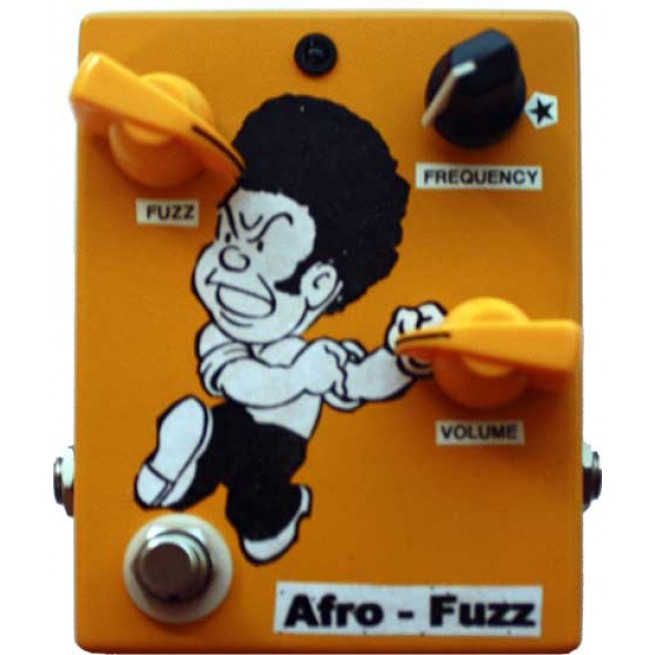
Loosely based on the fuzz face circuit with the addition of a 6 position frequency selector. It is actually a hybrid. Up front it has a Germanium transistor (40 years old, pulled out of early sixties Italian keyboards) for smooth clipping and followed by a high HFE silicon transistor for power. It is an exceptionally loud pedal. You can use it on any amp and it certainly will work well with any Marshall plexi-amp, or a Vox as well. This is the first fuzz pedal on the market that gives you that kind of flexibility. The best way to describe it is to listen to the clips that are posted. Once again, bear in mind that I only have a limited number of those transistors with the proper HFE..
-
 Availability: Pre-Order
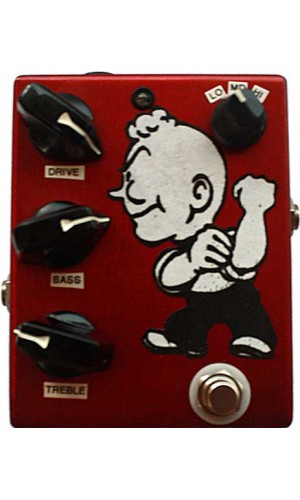
Fuzz Ball Buster
In short - The absolute perfect booster pedal for the front end of your vintage mid-gain amps such as Plexi Marshall, Orange, Hiwatt or Vox.
The new "Ball Buster" is the latest offering from Dirty Boy Pedals... It was conceived to be used to drive the front end of your old "one trick pony" amp and give you a whole new array of amazing and usable guitar tones.
GAIN KNOB - When the pedal is first engaged you'll notice an instant 10db (approx.) of clean pure boost ... as the knob is turned clockwise the pedal starts to explode with gain and natural compression... When fully clockwise you'll find yourself in Fuzz territory.
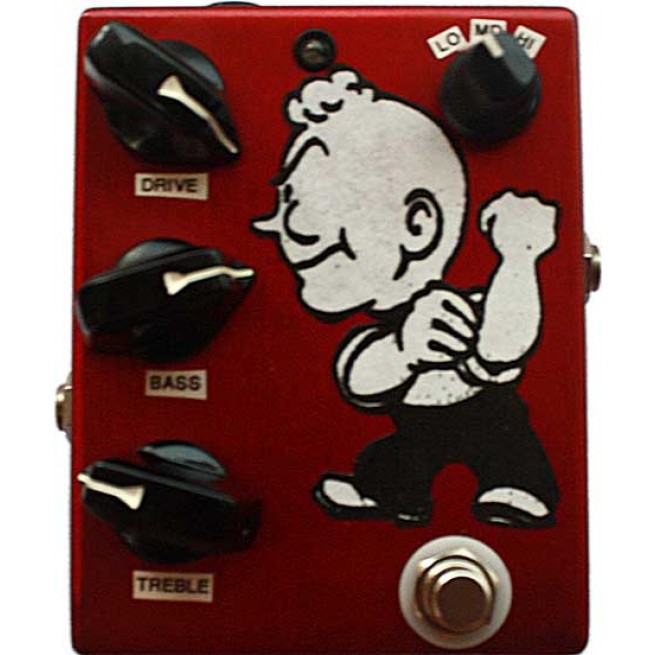
TREBLE/BASS KNOBS - Both perfectly voiced for guitar. The TREBLE can go from that perfectly transparent sheen to that old British cut with a simple twist of the knob, always rich and solid without that paper thin brittle high end thing that most pedals have. When the BASS knob is counter clockwise it is flat... As you turn it clockwise you'll hear your signal get rich and lush in a matter of seconds. It has been voiced so that you only get the usable bass frequencies that actually make your guitar signal fatter... Not that typical woofy, flubby thing that just makes your guitar harder to play... Both of these knobs used in conjunction w/the H-M-L switch is where the fun begins...
H-M-L SWITCH - The H-M-L switch does for your guitar signal much like what a mastering engineer does for your CD (In order to make your CD tracks as loud and as punchy as possible, many mastering engineers will often get rid or "shave" unusable low end frequencies that just cloud up the mix and eat up the energy of the track...getting rid of the unusable bass frequencies will actually give you more bottom end) The H-M-L switch allows you to shave or get rid of those unwanted unusable bass frequencies that just make your sound muddy, tubby and hard to play. Once you have gotten rid of those unusable bass frequencies, use the Bass knob to add in the right amount of usable bass frequencies to help get that super-rich lush bottom end that is perfect for both the fattest of leads as well as keeping that "tight low end chord thing" going on for Rhythm. Just plug the Ball Buster into the bass channel of an old plexi and you'll understand what I'm talkin' about.
The Ball Buster is also true bypass so as to not alter your "bypassed signal" and can be used with a 9vdc power supply if desired.
We have finally posted a soundclip for the Ballbuster. I have decided to make it a song rather then individual position sound clips. This song really rocks and is a great representation of what the pedal does. For some reason, this pedal has been super popular with major guitars players that are playing large venues like Colisseums and Madison Square Garden. Once you hear the clips you will understand why...
-
 Availability: Pre-Order
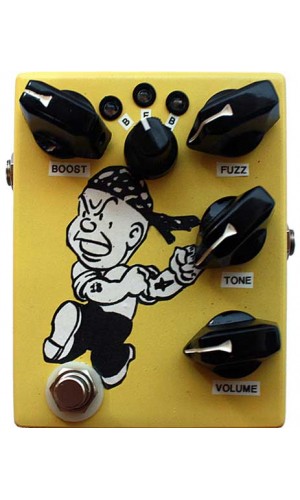
Fuzz Bass Bully
Ok all you Bass Players, I haven't forgotten about you. There seems to be a hole in the marketplace for effects for the bass players, just like at one time there wasn't much available for left hand players. Hence I created the "Bass Bully."
What began this whole madness was when we noticed in one of the top studios in Los Angeles a Bass rig they had installed in a Lunch Box. After some inquiry, it turned out to be an old German Bass circuitry that they used for both Direct Recording and Boost and Fuzz. I traced the origin of that bass and formulated a way to put it into a pedal without changing the circuitry. So it is a global system which means that your bass instrument both Volume and Tone need to be turned all the way up, then you control Volume and Tone only from the pedal.
And yes you may hear a little scratching in the pots but it is irrelevant since you don't usually change the amount of fuzz while you are playing. That is true to the original design and identical transistors create that unbelievable fuzz sound.
To begin with, it has an EQ circuit built in the pedal which I feel is superior to the circuit included in most basic basses. Most basic basses have a capacitor to ground for tone control. This EQ is based on a blend of capacitance, and that alone is worth the cost of admission.
The first position on the pedal is a Boost Feature. It does just that, boosts your signal and somehow adds a GLOW to your sound. This circuit is based on an INDUCTOR circuit like the wah pedals have. It is very cool. ( also worth the cost of admission )
The 2nd position on the pedal is a simple Fuzz. It is incredibly smooth and actually amazing since most of you know how difficult is is to fuzz a bass signal. Bass players have been forced to use guitar pedals up to now until the "BASS BULLY" arrived.
3rd position is like using 2 pedals in one. One is the Bass Boost, the other the Bass Fuzz. They are wired in series so the signal will go through the boost before getting to the fuzz so you can blend the two. Why you ask add a boost and a fuzz, well if you want that totally over the top, Farty 60's Sly and the Family Stone sound, there it is... You will have tons of fun with this pedal and it is beyond belief in the studio...
-
Fuzz Black Sheep
A fuzz? A cruncher?
This is a silicon based pedal with a built in booster. Some people will call it a Fuzz while others will call it a Cruncher.
This is a sound that we have not offered before. It is very powerful and probably the loudest pedal that I have ever heard.
The Acceptance switch determines how much input you are willing to introduce in it, while the level determines how much output you want to assign. The frequency selector is self explanatory.
The "Blitz" mode which is controlled by the right switch puts the pedal in total overdrive. The beauty of it is that you can accentuate notes at will while you are soloing or simply go for it with a wall of sound. You will be amazed on how you can get note definition in the Blitz mode. Because the pedal is so powerful, you can actually reduce the volume on the guitar, and instead of the pedal shutting down, it simply cleans up simultaneously, something that none of my other pedals do. You will discover just how much you can do with that pedal, but I recommend you start by checking out the video and listening to the sound clip as well.
The Black Sheep soundclip was created using a Black Face Fender Twin, an early 60's SG Jr. with a P-90 pickup. All the other guitar sounds are coming from the " Black Sheep " pedal in various settings, there are no other sound effects.
-
 Availability: Pre-Order
Fuzz Bun Runner
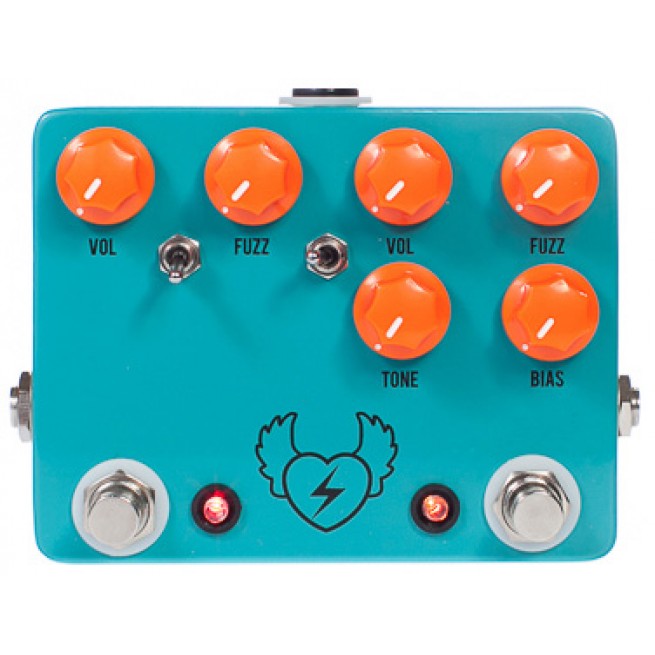
When Josh began working with Switchfoot’s Drew Shirley for his “Hello Hurricane” touring rig, the number one need was to have a single pedal that could do a lot of fuzz! The end result was the “Bunrunner 2 in 1”. On the left side you will find the JHS Astro Mess Fuzz and on the right side a heavily modified Tonebender that is oozing with germanium fuzz, warmth, character and fullness that is only found in the Bunrunner.
The Astro side gives you all the modern, gated and heavy fuzz you could ever use as well as 8 bit tones galore when needed. The Astro tilts it's hat to classic high gain fuzz pedals like the Ampeg Scrambler, Kay Fuzz and Octavia due to it's blistering amount of gain and volume on tap. Flip the "Gate" toggle up and find yourself splattering notes all over the place with style as the overal structures seems to beautifully fall apart under your pick attack. The Tonebender side is a real achievement in Tonebender style circuits, and it can do everything from Zeppelin riffs to lush natural overdrive with ease. The bias knob is very different than what is usually seen out there allowing big hefty overdrive drive tones all the way to a thick wall-of-fuzz heaven! You will also find that the tone control is actually useful and more of a tone shaping tool than a knob that removes harshness. When you add these two circuits together, you may find yourself playing things that you didn’t know your hands could play!
The controls for the Tonebender side are Volume, Tone, Fuzz and Bias while the “Astro Mess” side is identical to the single unit here. The new V2 has our Order Toggle switch so you can choose what circuit comes first when they are both on at the same time. Oh yea, the Tonebender is a true positive ground circuit but thanks to our Voltage reversal circuitry you can run this pedal on a normal 9v supply with your other pedals instead of some funky power supply like most germanium fuzz pedals out there!
Good examples of this pedal's tones are Switchfoot’s “Mess Of Me”, “The Sound” and most anything on the “Hello Hurricane album”. Check out those tracks at www.switchfoot.com
-
 Availability: In Stock
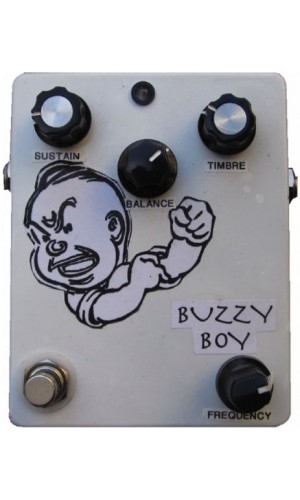
Fuzz Buzzy Boy
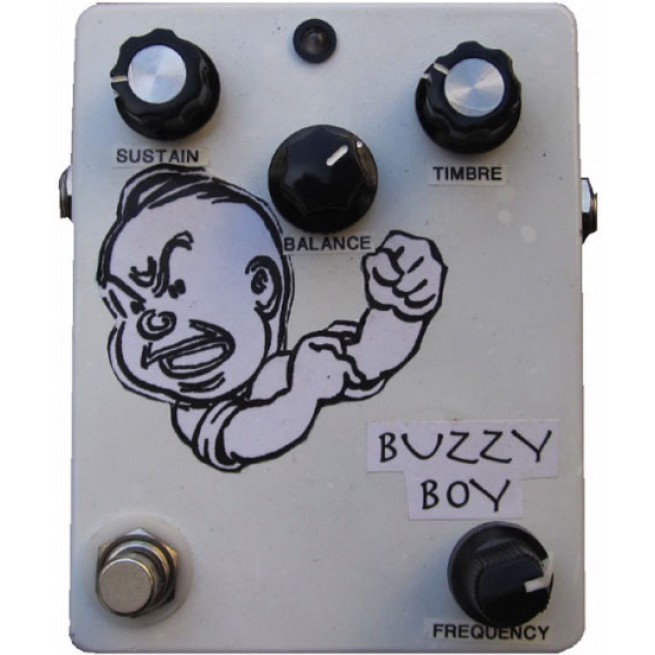
I would like for you to welcome to our Dirty Boy Pedals Family the latest member "BUZZY BOY." You may have realized by now that Tone Shaping is what I do with my pedals rather then something like Delays or Echoes or Phasers or Choruses.
What makes this pedal different from all the others is that it is actually all about FIZZ. It is a more finite sound, more precise with a whole lot more definition then a fuzz. (great for bass runs) Now, mind you, it is not thin by any means. It is as fat as you can get it.
All you have to do is watch the Demonstration Video or listen to all the sound clips that we have posted.BUZZY BOY is very refreshing yet it is a MONSTER as well. It can be ridiculously loud or it can be very subtle as well. It comes with 3 knobs Sustain, Balance and Timbre along with my signature Frequency selector. To make it more to the point, I just chose 3 frequencies, one very low , one midrange, and one very high. No big deal there, but you will notice that the 3 knobs work hand in hand with each other giving you a plethora of sounds. The balance knob also becomes like a volume control at times so you will have to dial it in to your pleasure every time you change the timbre (fancy name for tone control ) and the sustain as well. It sounds complicated but it's not, it is just GREAT FUN.
Oh yeah, one more thing, we dragged out the $99 stratocaster for the video as well as the " Buzzy Boy Song " which is part of the sound clips.
-
 Availability: Pre-Order
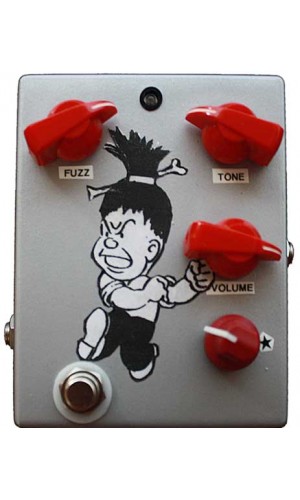
Fuzz Cannibal Boy
This pedal is a very accurate and very flexible sustain pedal. Unlike the square wave fuzz, this is based on sine wave clipping. You have a frequency selector and also a tone control. This pedal utilizes 3 germanium transistors for the softest clipping available. This is a pedal that will best suit the recording artist that needs to have a solo "sit" in a track. A true professional instrument.
-


 Availability: Pre-Order
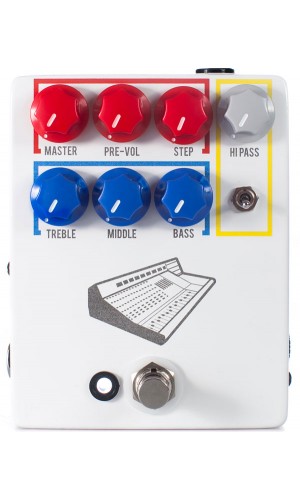
Fuzz Colour Box
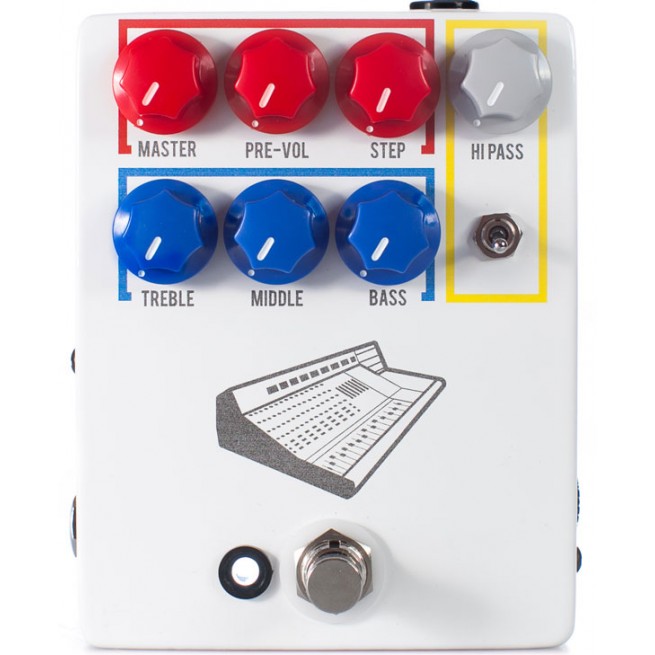
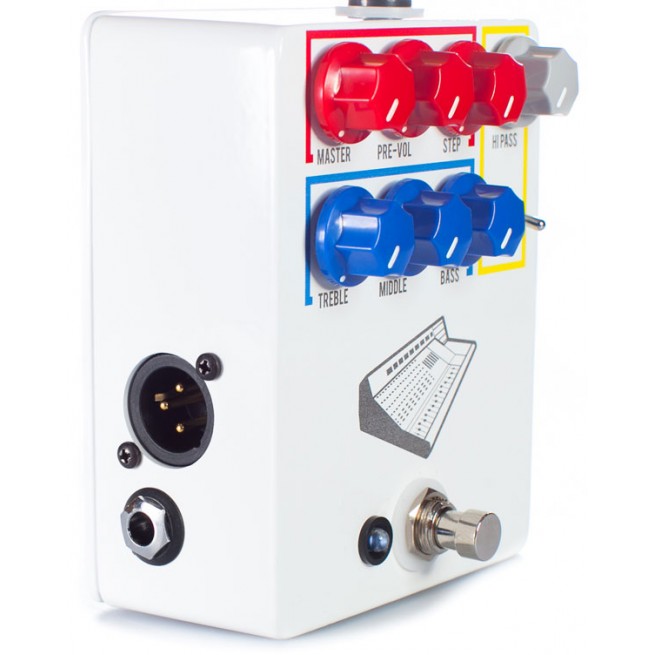
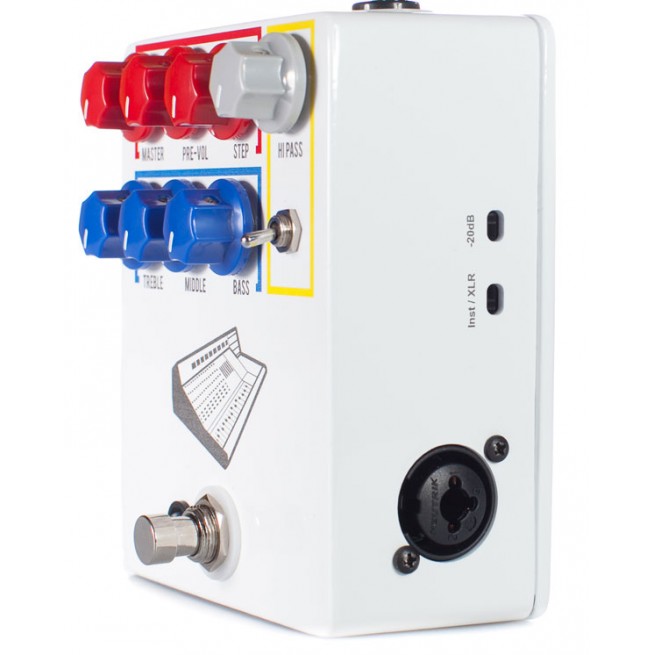
In 1961 a British engineer would start a company from a spare room in his England home that would permanently change the history of the Pro Audio industry. This company set a trajectory for musical tones that spanned across genres and impacted every generation that followed. We are talking about the infamous piece of gear known as the Neve* recording console. From "Love Me Do" by The Beatles to the famous sounds of Led Zeppelin, U2, Spoon, Pink Floyd, Motown, Quincy Jones, Nirvana, Steely Dan, Neil Young, Tears For Fears, and Tom Petty (the list is endless), The Colour Box is our tribute to the legend and application of how a piece of gear can change music.
Have you ever heard songs like the Beatles "Revolution", or Motown classics like Jackson 5, Marvin Gaye, or even the modern Radiohead's "Bodysnatchers" and thought, "How are they getting that guitar sound?" Well, the answer is sort of clothed in obscurity, but it's actually created by the simplest practical application......plugging a guitar directly into a vintage studio console and recording "direct in." The JHS Pedals Colour Box is designed and created to allow you to recreate these infamous guitar tones with your live rig, or in a studio environment by using 100% analog circuitry true to the design and schematic of vintage Neve* circuitry. The Colour Box is completely free from any digital modeling. Never before have "direct in" tones been available from your guitar amp in the way that the Colour Box delivers them. Aside from creating these "direct in" tones, the Colour Box covers all the ground that you would expect a high quality studio preamp to cover. From your microphone, bass, keyboard, or even your acoustic guitar, it does it all.
-
Fuzz Dirty Girl
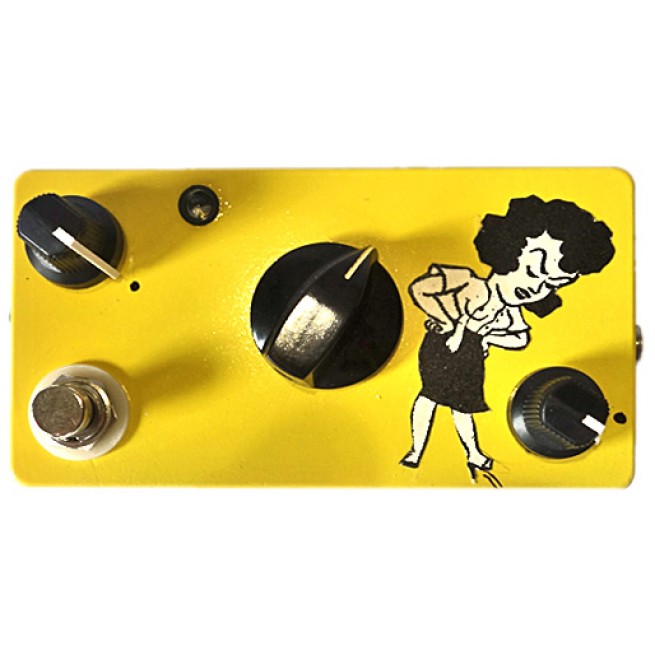
A one size fits all "One Knob Fuzz". It comes without any instructions. This will be a total personal discovery type of journey. On the first video, Blues Saraceno demonstrates the Green Wah and the Dirty Girl through a GAV 19T amplifier made by Chandler Limited, as recorded live at NAMM 2013 at the Big City Music booth. On the second one, he uses almost the same setting (except without the Dirty Wah) and trying the new "Armada" guitar by Ernie Ball.
-

 Availability: Out Of Stock
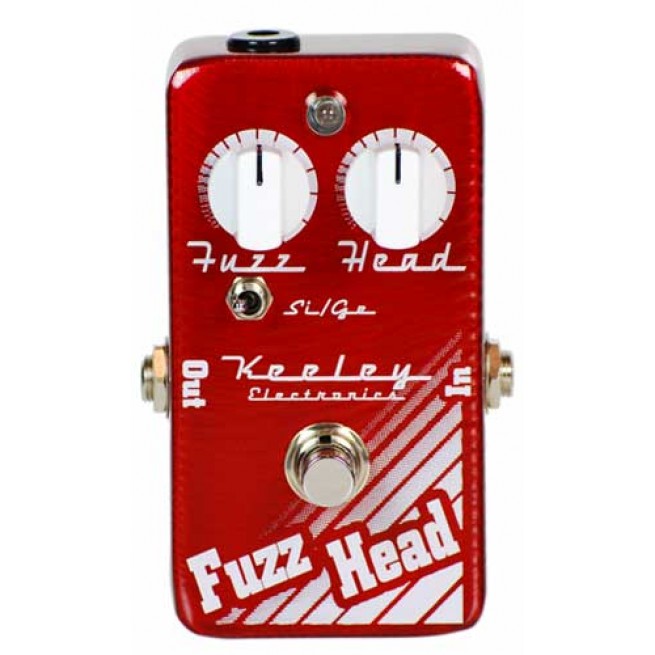
Fuzz Fuzz Head
NOW A READERS CHOICE AWARD WINNER BY GUITAR PLAYER MAGAZINE READERS!!!
This might be what you've been looking for in an overdrive/fuzz box! The blend between the two is simply wonderful! The Fuzz Head is designed to work like Fuzz Face pedals that many players use as a LEAD BOOST. A Fuzz Face can be muddy, lacking note definition, too bassy, and lacking sustain. An overdrive sometimes doesn't give enough or is too smooth. In contrast, our design is transparent, has a better frequency response, and gives you that cutting edge for lead breaks.
The Fuzz Head Pedal is very transparent and dynamic. It takes the best qualities of the germanium designs and the overdrives. Roll back the volume on your guitar for clean sounds and a variety of tones, textures, and natural fuzz/overdrive!
-
 Availability: In Stock
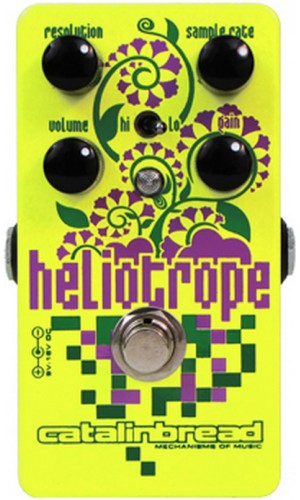
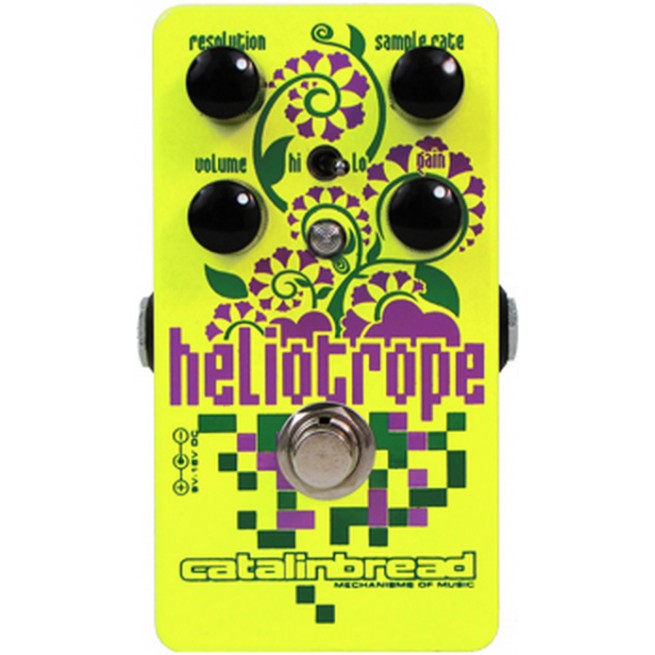
Fuzz Heliotrope
What do you call an effect that isn’t quite a Bit Crusher, or an Octave, or a Harmonizer, or a Ring Modulator, or a Lo-Fi dirt box/fuzz – but a bit of a blend of each?
Yeah – we don’t know either, so we came up with “Harmonic Pixelator”.
The Heliotrope is an "analog bit crusher" of sorts. Since there is no analog to digital conversion happening it isn't a true bit crusher, hence the name "Harmonic Pixelator". It works with guitar, bass, keyboards, etc. We designed the pedal to be intuitive and easy to use even though what it is capable of sonically is actually quite complex and varied. The Heliotrope can be powered from a 9v-18v adapter or a 9v battery. At 18v you’ll notice more output volume and headroom is available.
-
 Availability: Out Of Stock
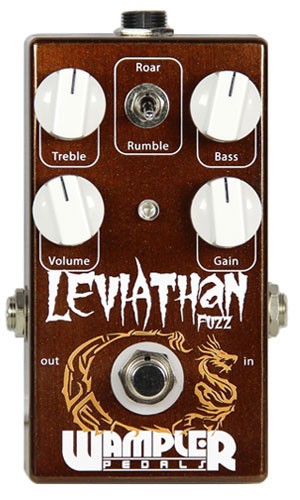
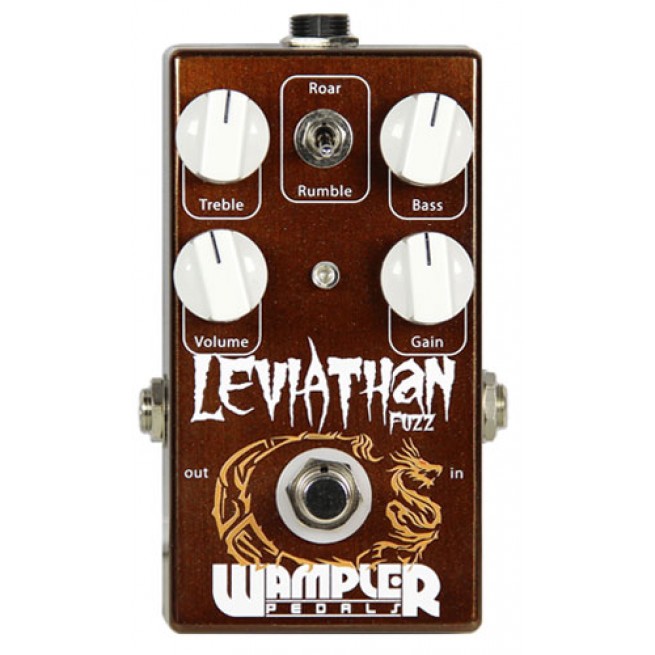
Fuzz Leviathan Fuzz
We keep on getting asked about a Fuzz pedal. Do we do one, can you do one... Basically, we got the message.
So, we did what we always do, Brian locked himself away and when he emerged sometime later to show us what he had, it was clear he had created a monster... A pedal so aggressive, so tonally destructive we seriously considered whether it was right for us to release it.
What we at Wampler Pedals do is make pedals that retain your tone and add to it, not smash it into a million pieces. Once we had got over the sheer brutality of it, we noticed something strange... Something about the sound... Brian has created an uber aggressive fuzz pedal: not only does it destroy your tone, it somehow also manages to retain it... Each guitar still sounded like itself when played through it.
Here it is, the Leviathan Fuzz. A true monster. With complete control over the tone: volume, gain, bass and treble and a switch that changes from a roar to a rumble feel. The switch takes you between GE and SI diodes, allowing you to more precisely shape the nature of the sound between a more compressed but gainier sound, or an open, throaty tone. Let your imagination guide you...
Switch it a few times to get the hang of its sound, and from then on you'll know when you want to rumble, and when you want a roar!
You know that this pedal will be the most consistent and versatile fuzz available. This is a true Wampler original, the circuit was born on the operating table in the Wampler basement, and you know if you turn your back on it for a second, it will bite you on the ass.
-
 Availability: In Stock
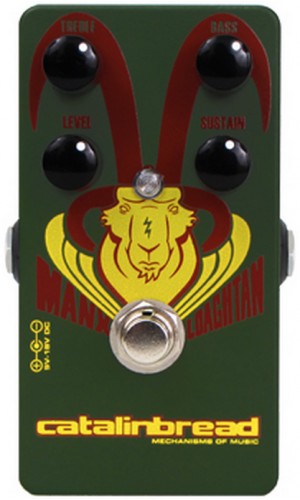
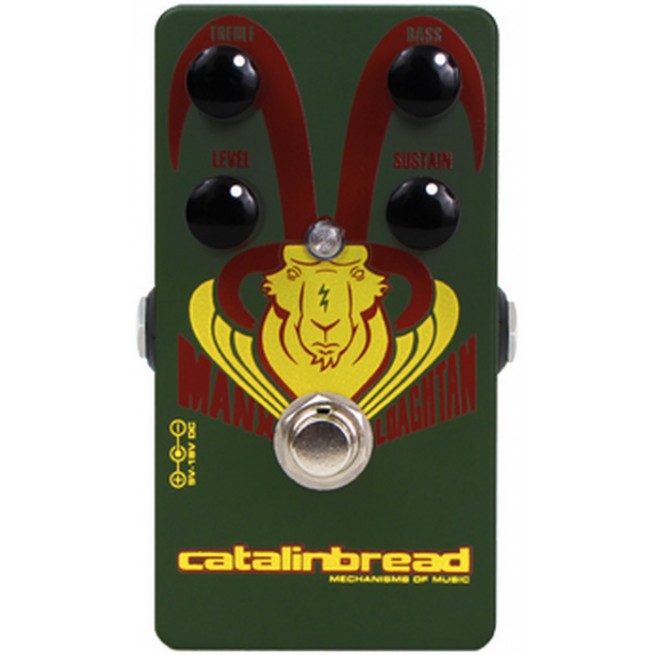
Fuzz Manx Loaghtan
The Big Muff is probably one of the most sought after, and heavily replicated pedals on the planet. Even though it is still made by the original manufacturer, it's long and varied history has made it's way into many other pedal manufacturer's fold. When we set out to create the Manx Loaghtan fuzz, our goal wasn't to brush off an obscure build to recreate. Rather than looking back over that pedals heritage, we wanted to try and push it forward. One of the more common traits among fuzzes of that ilk is the tone control. However, we felt that such a tone stack was rather limiting. Often you would follow the sweep looking for the one spot that sounded right. The one spot where it didn't sound too boomy or constricted and thin. Where the pedal finally finds its harmony. We wanted it to not be a compromise between too bright and too bassy, but also be capable of doing either or both with a nice mid range scoop in order to sound HEAVY for chunky chords. So rather than using the traditional tone control we incorporated the Baxandall.
-
 Availability: In Stock
Fuzz Merkin
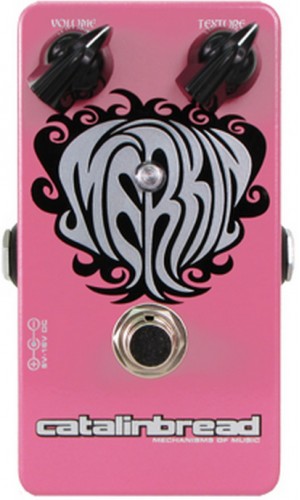
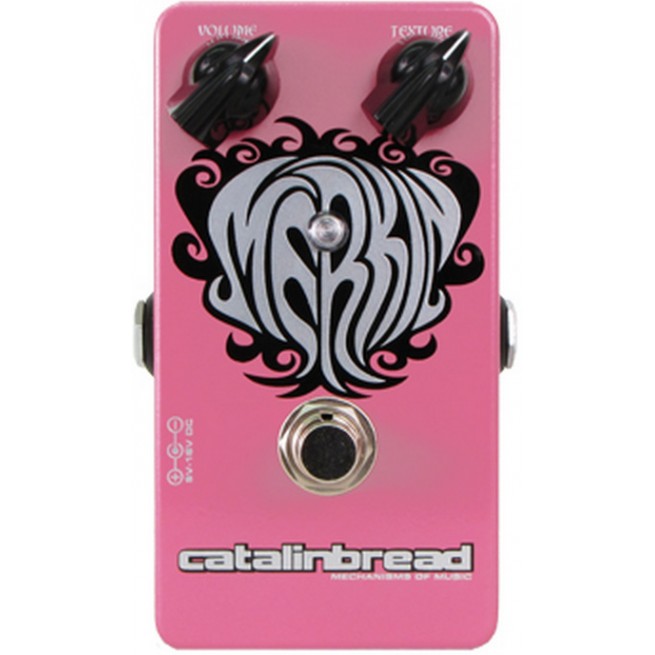
The Catalinbread Merkin is a fuzz pedal that's just 'rite' for classic sixties fuzz sounds and beyond! Extended and refined from a classic fuzz circuit, this 3 silicon transistor circuit is very textural, varying from blunt to ripping. It's controls are simple, a volume, and a texture knob with huge range, from cleanish blend counter-clockwise to full fuzz as you turn the knob clockwise.
When developing the Merkin, we chose components for sweet yet buzzing tone which still has a very touch sensitive response. The Merkin is also very responsive to your guitar's volume and tone controls so you can spend less time stooped over your pedalboard, and more time actually playing. Along with a slew of sixties fuzz sounds from the Ventures to the Stooges and many points in between, The Merkin Fuzz is able to do octave-up sounds by using your guitar's neck pickup with the tone rolled off. It works great for bass too.
The life-blood of a fuzz is its power supply and the Merkin is no different. Use a carbon battery for warm vintage tone and smooth response. Use an alkaline or 9 volt dc supply for a harder sound, or run on 18 volt DC supply for even more output and an aggressive sound! Volume unity for the Merkin resides around 9:00, which means there's lots of boost on tap.
-
 Availability: In Stock
Fuzz Octapussy
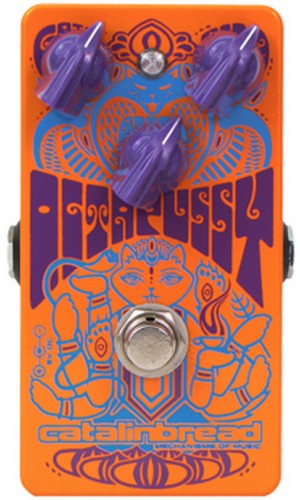
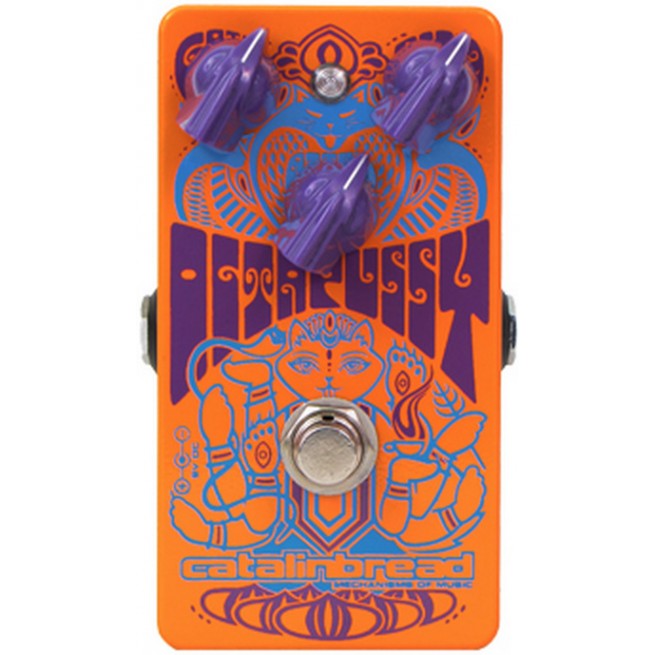
The Octapussy is essentially, an octave-up fuzz in the tradition of the Octavia. But it’s not a clone of that circuit! Nope, it’s an original circuit utilizing 3 silicon transistors and two diodes that takes the tradition to the next level! The preamp section is custom voiced to give you an extremely dynamic playing response. You’ll get those famous high-octave lead tones up high on the guitar neck but you’ll also get an amazing array of fuzz tones anywhere else on the neck - just by how you play it and how your GUITAR’s volume, tone, and pickup selector is set.
-
 Availability: In Stock
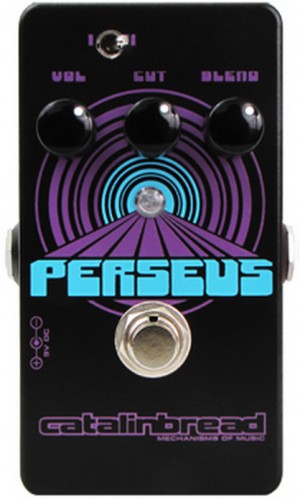
Fuzz Perseus
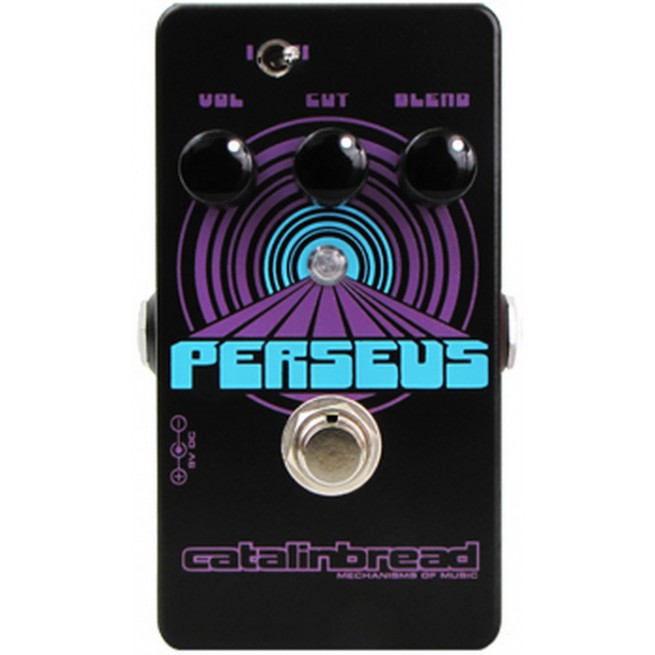
Careful, the Perseus just might take your head off. While the mythology behind Perseus is certainly interesting, the Perseus sub-octave fuzz is actually named after the Perseus cluster, where the lowest note in the universe eminates from a black hole. What’s happening out there is that intergalactic gas has concentrated around a cluster of galaxies, forming a cloud. A massive black hole is sending out jets of particles that crash into the cloud, causing pressure waves to ripple outward. Some astronomers interpret these as sound waves. Of course, even if you call it sound, it’s too low for anyone to hear. They estimate the note to be a “B flat,” about fifty-seven octaves lower than middle C.
-
 Availability: In Stock
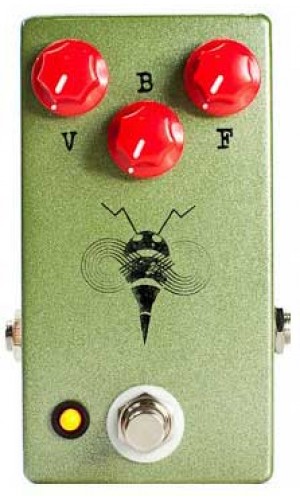
Fuzz Pollinator
Since the early days of Rock & Roll, no other pedal has made its way on more recordings, stages, and rigs than the classic Fuzz Face. The Pollinator is our take on a classic design but with some huge improvements.
The original Fuzz Face pedals have very low output volume, so we tripled the available headroom! You can achieve a wider range of tones now because even at lower gain settings, the volume you need is there. Another addition is our external bias knob. This allows you to fine-tune just the right amount of power to the perfectly hand-matched germanium AC128 transistors inside. The bass is tight and focused but still classic. The highs are as crisp as anything we’ve ever heard in a vintage design. This Fuzz cleans up better with your guitar's volume than any of our others if your into that!
Germanium fuzz with more mojo than a velvet painting of Hendrix!
-
 Availability: Out Of Stock
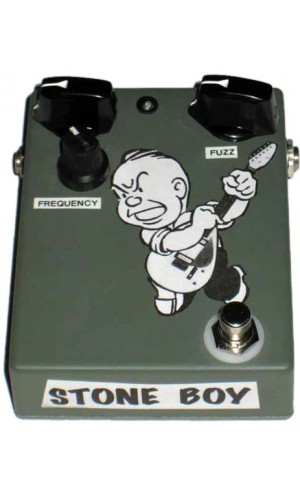
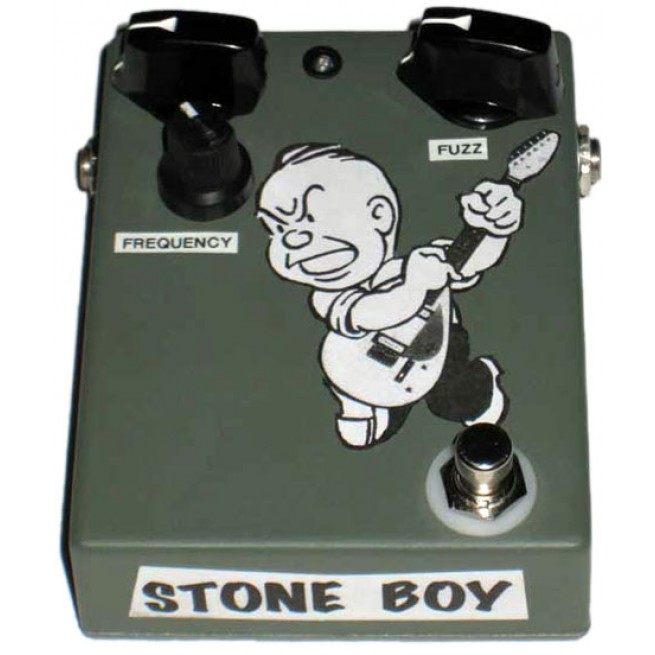
Fuzz Stone Boy
Once a year, I introduce a new pedal to my line. This year it is called the " Stone Boy " Of all my children, this is the one that took longest to conceive. ( 8 months of R&D ) There are many things that make this one different from any other in the line.
For one thing it runs on 2 X AA batteries, super cool concept which allows the pedal to run cooler and last forever. But don't worry, you don't have to get a 3 volt charger since the voltage for the adapter is being reduced INSIDE the pedal, and your standard 9 voltswall-wart will work fine.
Now for the sound. I wanted to emulate the fattest lead sound possible and the smoothest ever. I kept thinking of Leslie West at his peak and how his guitar sounded like 3 guitars when he did his leads.
This pedal is not for noodlers or posers, but for precise and professional players who want to destroy. It is a total redesign of old technology which had a lot of flaws since it was too early for its time. I cleaned everything up with later designs but left one position on the frequency selector ( the highest ) for the real early fuzz effects in case you want to use it.
-
 Availability: Pre-Order
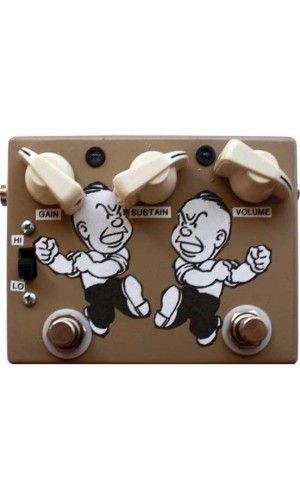
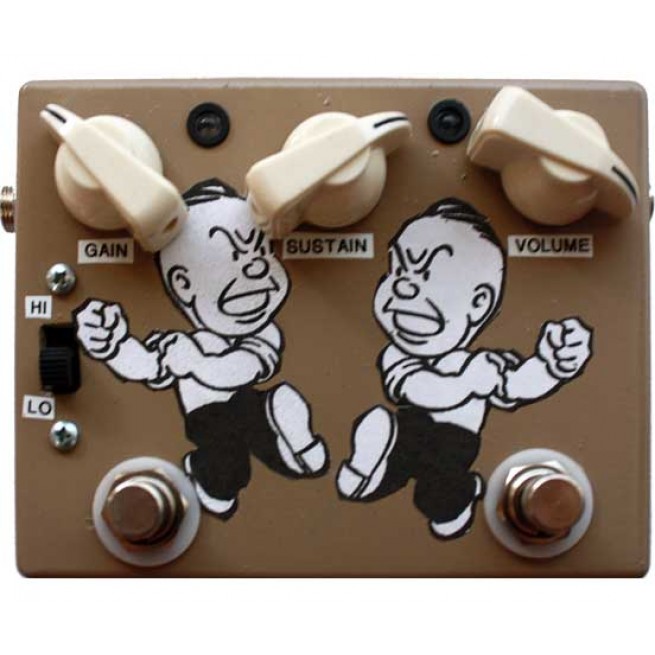
Fuzz Tone Bully
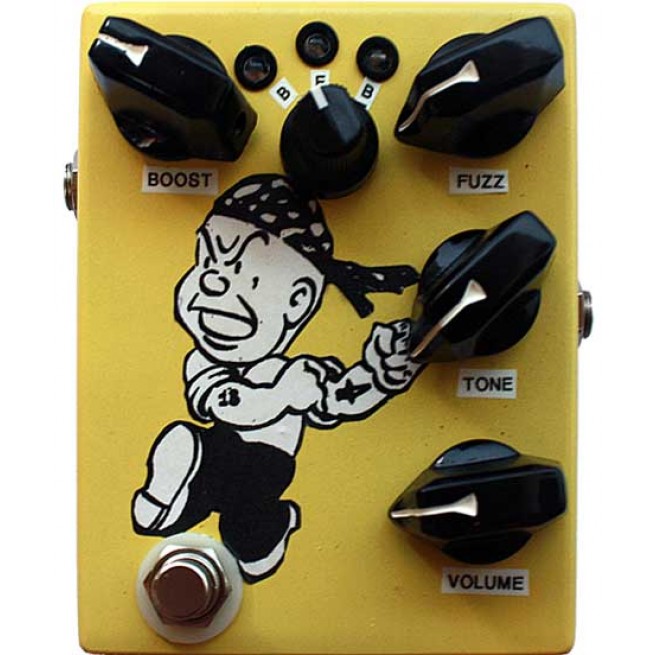
Thought I'd give you a heads up about my latest pedal that may interest you. It's called the " Tone Bully ". It's 2 pedals in one. The first one is actually a treble booster like the Germanium Boy but with only 2 frequency selections, high and low and a gain knob. The second one is a sustainer with fuzz and volume. The first one can be used individually from the other and the second one can be individually from the booster.
What makes this pedal special is that you can use both the booster and the sustainer simultaniously. It then creates this super wide sound that will exceed any sound that you have ever heard from a single pedal. It is just not louder, but so fat without being choked and keeps all the characteristics that you would expect from a very accurate unit. This is similar to the sound of well known artists that believe in using more then one sustain effect at once but all wrapped up in one unit. Of course you can change the whole width of the sound by selecting the either High or Low position on the booster.



© 2012 BNEFFECTS ALL RIGHTS RESERVED
TERMS AND CONDITIONS
CONTACT:
021-91129250 / info@bneff[email protected]
021-91129250 / info@bneff[email protected]