

Your shopping cart is empty!
Shop by Brands
- Adventure Audio
- BIGBENDS
- Bonding Solutions
- Burkey Flatliner
- Catalinbread
- Chase Bliss Audio
- Cmatmods
- death by audio
- Dirty Boy
- Earthquaker Devices
- Emerson
- Epigaze Audio
- Framptone
- GOTHAM
- Hudson Electronics UK
- JHS
- JHS Mods
- KEELEY Electronics
- KEELEY Mods
- KS Aji
- Lava Cable
- Lovepedal
- SolidGold FX
- Stone Deaf FX
- Walrus
- Wampler
Shop by Pedals
- Arpeggiator
- Bass Pedals
- Boost
- Buffer
- Chorus
- Compressor
- Delay
- Distortion
- EQ
- Foot Switch
- Fuzz
- Looper
- Octave
- Overdrive
- Phaser
- Pitch Shift
- Reverb
- Synthesizer
- Tremolo
- Univibe
- Vibrato
- Volume
- Wah
- >>Collector's Corner<<
Shop By ACCESSORIES
OTHER SERVICES
ACCEPTED PAYMENTS
JOIN OUR NEWSLETTER!
-
 Availability: In Stock
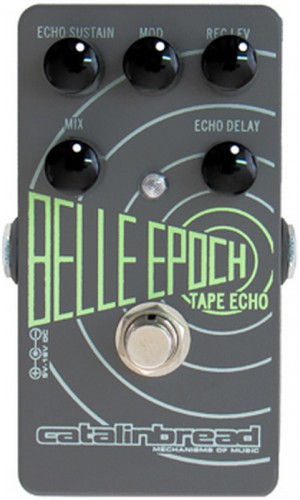
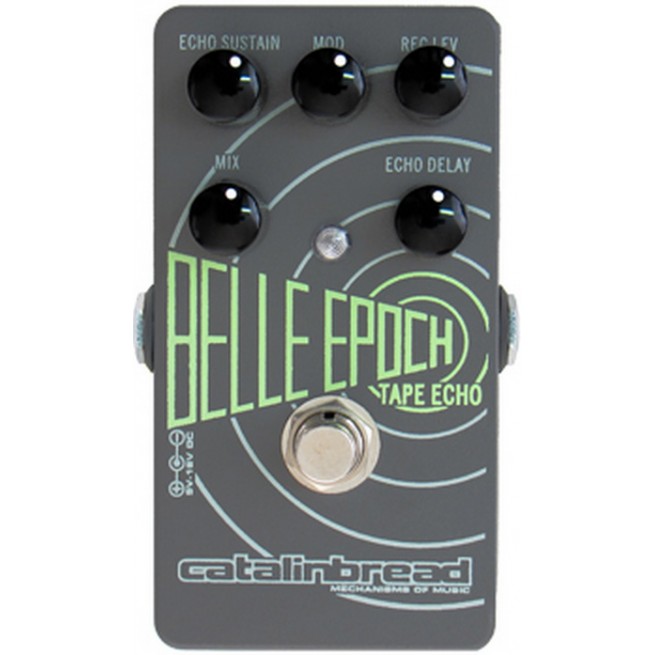
Catalinbread Belle Epoch
The Catalinbread Belle Epoch Tape Echo, has tape echo sounds so authentic you’d swear there was tape inside the pedal! Inspired by the Maestro Echoplex, EP-3 model, perhaps the most famous tape delay ever, the Belle Epoch features everything we love about the EP-3 in a small, maintenance free pedal format. We felt that a “tape echo” pedal was much more than just a standard digital delay with some “filtering” on the repeats. There are a lot of subtle and not-so-subtle traits of the Echoplex that needed to be implemented in order to be authentic. The preamp, the self-oscillation character, the ability to play the pedal as an instrument unto itself, the ability to control the “record level” of the signal hitting “tape”, the wow and flutter, the way the repeats decay, the way the circuit interfaces with the amp and other pedals - all these things were important to get right.
-
 Availability: Out Of Stock
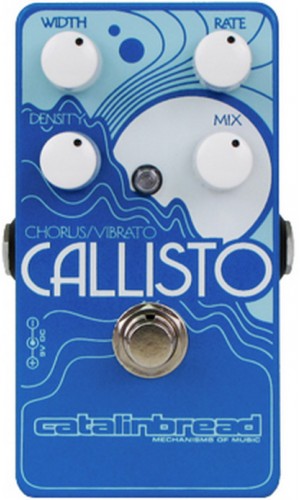
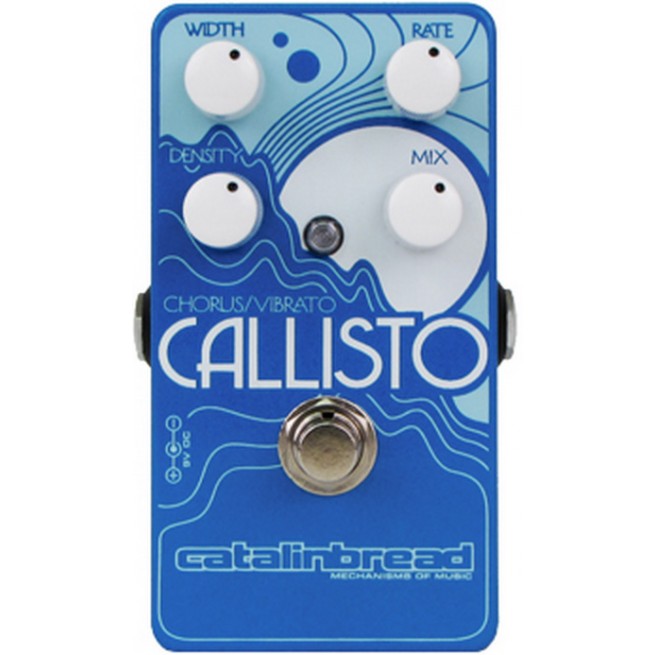
Catalinbread Callisto
The Catalinbread Callisto is a Chorus/Vibrato pedal, which employs an MN3007 Bucket Brigade chip at its core. It's interface is simple, intuitive, and provides a multitude of sounds ranging from subtle and shimmer to rotary speaker-like to off-kilter warping/warble sounds.
The Callisto's small size and elegant, versatile feature set make it a great addition to any pedalboard. The Callisto is powered using a 9v negative tip DC power supply or 9V battery, is true bypass, and integrates various highest quality components to achieve the best tonal response possible. Catalinbread utilizes an old school MN3007 bucket brigade chip, just like early chorus pedals, and uses an audiophile Burr Brown OPA2134 chip in the audio path to give the Callisto a natural feel and dynamic playability.
-
 Availability: In Stock
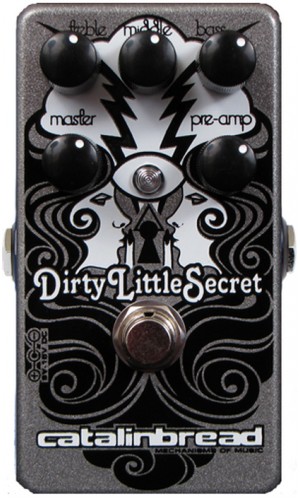
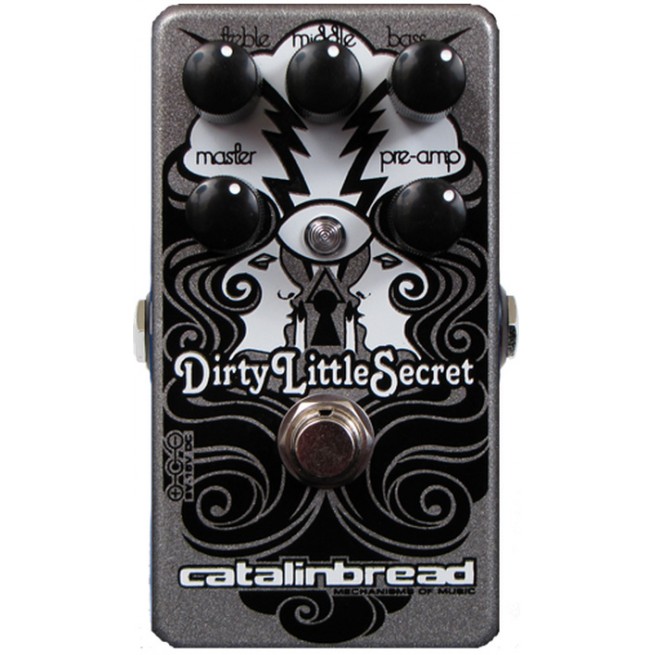
Catalinbread Dirty Little Secret
The Dirty Little Secret has earned itself a well-deserved reputation for replicating the sound and feel of a classic era Marshall amplifier, supplying one of the most iconic guitar sounds in music. When the JFETs used as the base for the Dirty Little Secret were discontinued, and as our stock of them began to dwindle we knew we had to find ones still being manufactured. However, rather than simply re-voicing around these new JFETs, we decided to push the envelope and provide an amazingly robust feature-set, from ever evolving listening and circuit skills, and pure power of intention. This isn't just 'a' Marshall in a box, it's the most versatile and dynamic Marshall-style overdrive out there!
-
 Availability: In Stock
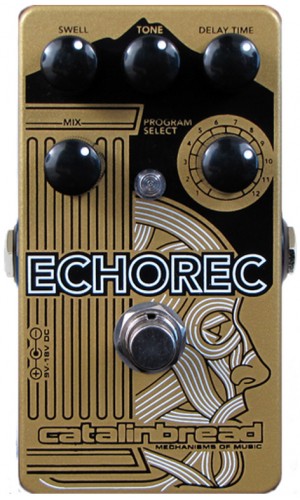
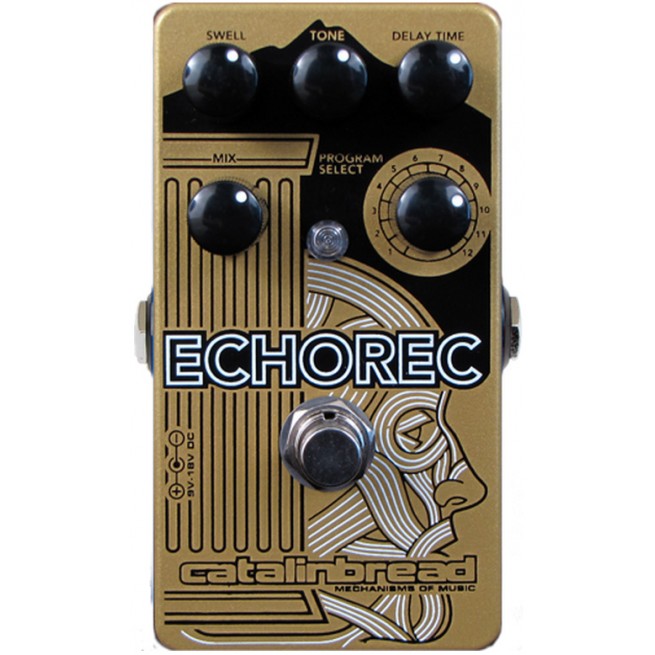
Catalinbread Echorec
The Catalinbread Echorec is based around the legendary Binson Echorec, an arcane tube echo which incorporated 4 playback heads and a spinning magnetic drum as its recording medium. The Binson is probably most famously known for Pink Floyd's use of the unit, and has long captivated musicians for both its rhythmic and ambient characteristics. We managed to include all the features of the original (and then some) while still keeping it in a small standard pedal sized enclosure.
The Catalinbread Echorec has 12 programs which allow for all combinations of the 4 delay heads (something the original was never capable of.) The original also has a fixed speed, and thus a fixed delay time, while the Catalinbread Echorec can go from 40ms-1000ms. The repeats give you the ability for a single repeat or can go into spaceship feedback. The tone control is very useful, able to be tonally flat or dark and resonant on one side or bright and bubbly on the other. The mix allows for 100% wet or dry signal. Inside the pedal you have the ability to run in true-bypass or trails mode, as well as a trimmer for gain and modulation.
-
 Availability: In Stock
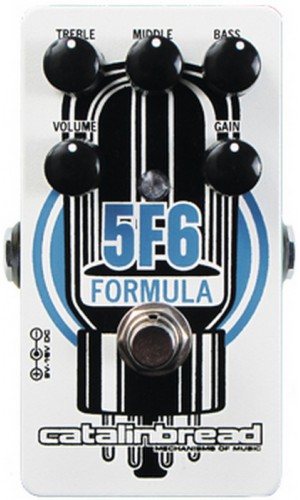
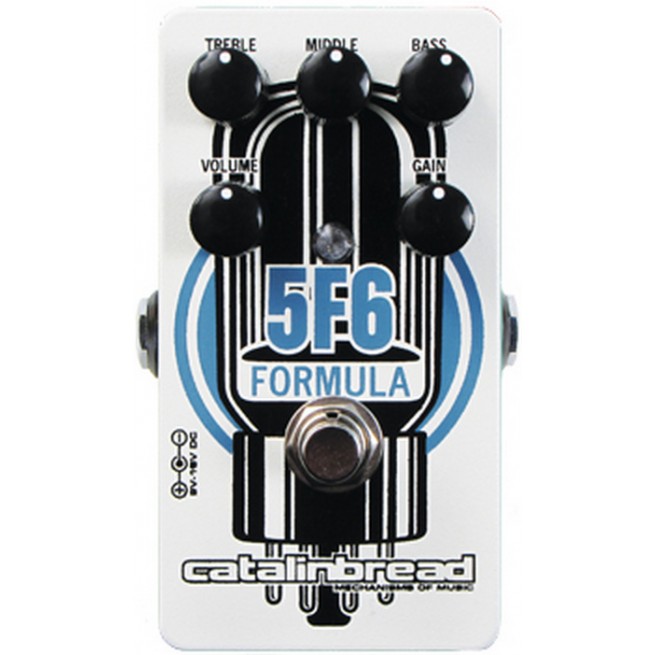
Catalinbread Formula 5F6
The Formula 5F6 adds vintage tweed Bassman response to our range of Foundation Overdrives, giving you the awesome characteristics of this classic amp into any clean amp.
The tweed Bassman may be the most influential *guitar* amp of all time. Although it was marketed as a bass amp, its treble, middle, bass and presence controls and 4 x 10 configuration were perfect for guitar, as guitarists soon figured out. How influential was the Bassman? Look up the schematic and compare its preamp to that of a Marshall or Vox and you'll see!
-
 Availability: Out Of Stock
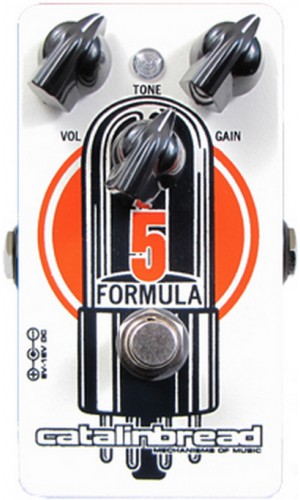
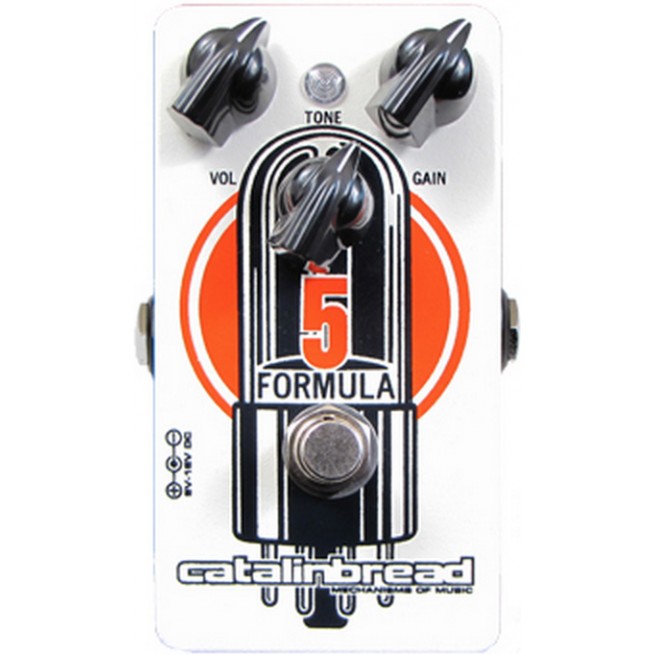
Catalinbread Formula No.5
The Formula No. 5 was inspired by old tweed amps, most notably the 5E3 circuit. The character of the 5E3 is very unique. It has very minimal power filtering, low plate voltages, elemental tone stack, and does next to nothing to control the low end between gain stages, not to mention the under-rated output transformer and speaker. The entire system runs inefficiently resulting in a loose bass, greasy mids, cutting treble, and incredible grit – none of these qualities were ideal or intentional back in the day. In spite of this, over the past five decades the amp inspired some of the coolest, most sought after guitar tones ever recorded.
We’ve captured the unique qualities of these amps in the Formula No. 5. For this circuit we felt cascaded JFET gainstages yielded the best result. They have a softer sound than MOSFETs. JFETs also have much more natural attack/decay than diode clipped rigs which are pingy on the attack and fizzy on the decay. We chose capacitor types that enhanced the midrange and burnished the treble.
-
 Availability: In Stock
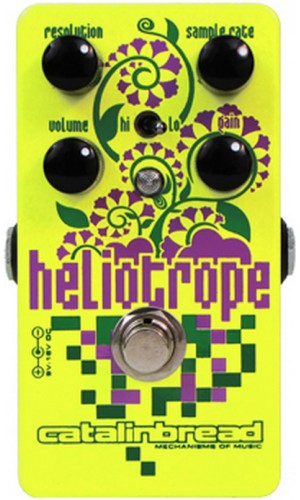
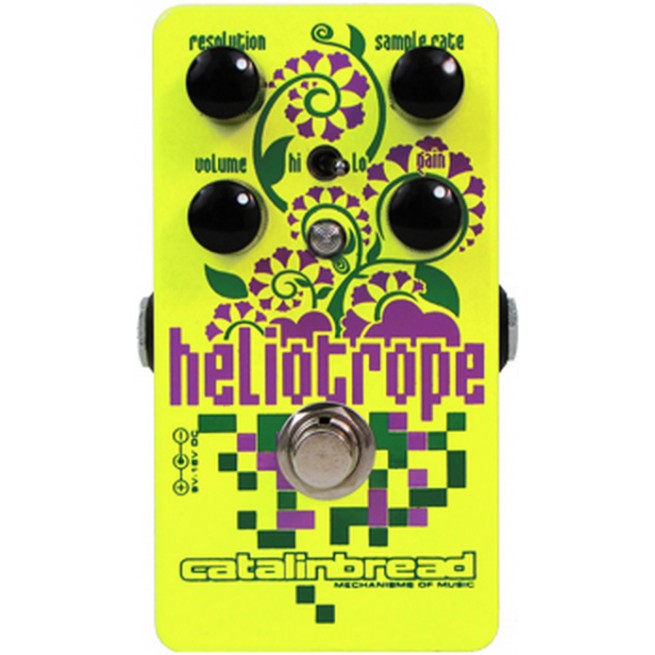
Catalinbread Heliotrope
What do you call an effect that isn’t quite a Bit Crusher, or an Octave, or a Harmonizer, or a Ring Modulator, or a Lo-Fi dirt box/fuzz – but a bit of a blend of each?
Yeah – we don’t know either, so we came up with “Harmonic Pixelator”.
The Heliotrope is an "analog bit crusher" of sorts. Since there is no analog to digital conversion happening it isn't a true bit crusher, hence the name "Harmonic Pixelator". It works with guitar, bass, keyboards, etc. We designed the pedal to be intuitive and easy to use even though what it is capable of sonically is actually quite complex and varied. The Heliotrope can be powered from a 9v-18v adapter or a 9v battery. At 18v you’ll notice more output volume and headroom is available.
-
 Availability: In Stock
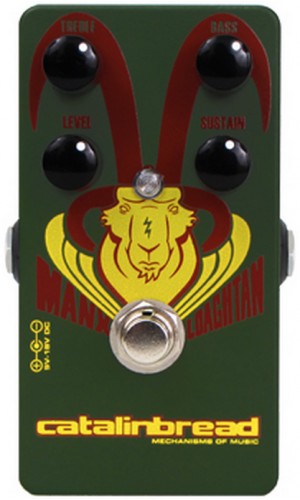
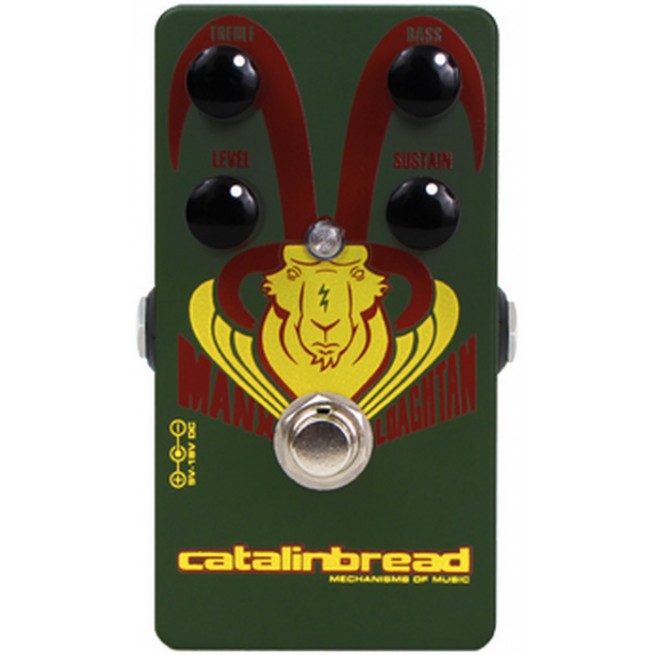
Catalinbread Manx Loaghtan
The Big Muff is probably one of the most sought after, and heavily replicated pedals on the planet. Even though it is still made by the original manufacturer, it's long and varied history has made it's way into many other pedal manufacturer's fold. When we set out to create the Manx Loaghtan fuzz, our goal wasn't to brush off an obscure build to recreate. Rather than looking back over that pedals heritage, we wanted to try and push it forward. One of the more common traits among fuzzes of that ilk is the tone control. However, we felt that such a tone stack was rather limiting. Often you would follow the sweep looking for the one spot that sounded right. The one spot where it didn't sound too boomy or constricted and thin. Where the pedal finally finds its harmony. We wanted it to not be a compromise between too bright and too bassy, but also be capable of doing either or both with a nice mid range scoop in order to sound HEAVY for chunky chords. So rather than using the traditional tone control we incorporated the Baxandall.
-
 Availability: Out Of Stock
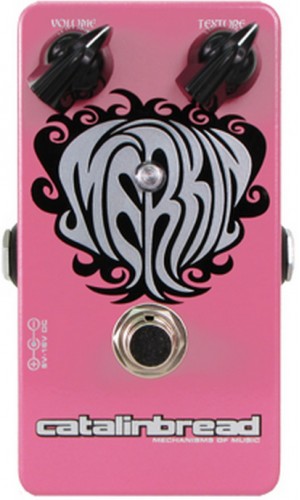
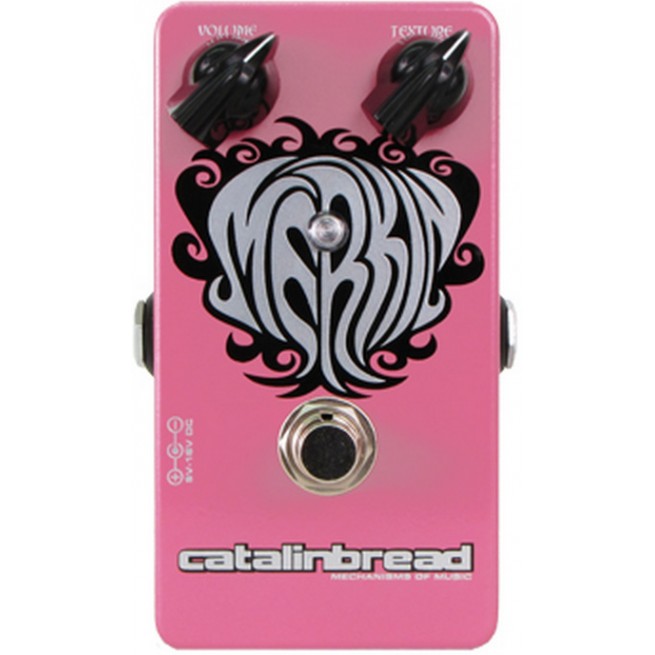
Catalinbread Merkin
The Catalinbread Merkin is a fuzz pedal that's just 'rite' for classic sixties fuzz sounds and beyond! Extended and refined from a classic fuzz circuit, this 3 silicon transistor circuit is very textural, varying from blunt to ripping. It's controls are simple, a volume, and a texture knob with huge range, from cleanish blend counter-clockwise to full fuzz as you turn the knob clockwise.
When developing the Merkin, we chose components for sweet yet buzzing tone which still has a very touch sensitive response. The Merkin is also very responsive to your guitar's volume and tone controls so you can spend less time stooped over your pedalboard, and more time actually playing. Along with a slew of sixties fuzz sounds from the Ventures to the Stooges and many points in between, The Merkin Fuzz is able to do octave-up sounds by using your guitar's neck pickup with the tone rolled off. It works great for bass too.
The life-blood of a fuzz is its power supply and the Merkin is no different. Use a carbon battery for warm vintage tone and smooth response. Use an alkaline or 9 volt dc supply for a harder sound, or run on 18 volt DC supply for even more output and an aggressive sound! Volume unity for the Merkin resides around 9:00, which means there's lots of boost on tap.
-
 Availability: In Stock
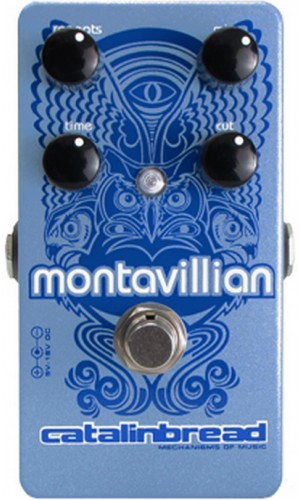
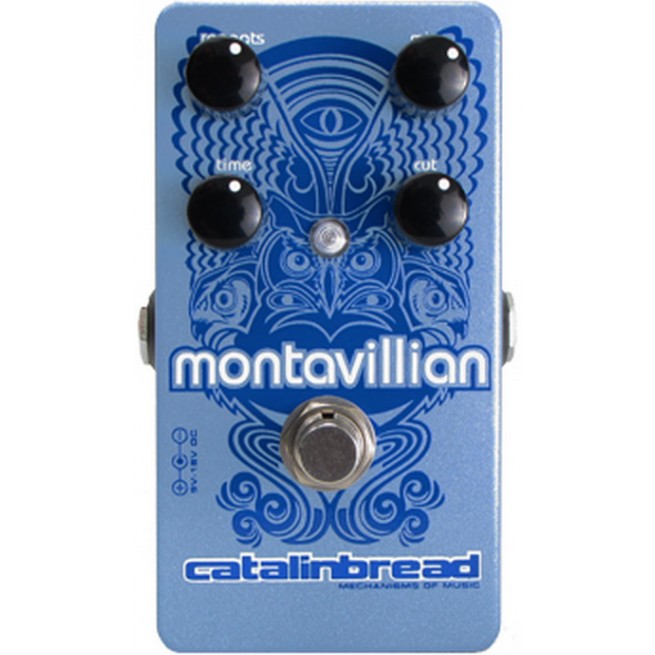
Catalinbread Montavillian
Spoiled by the various tube driven echo units we have around the shop, we wanted the Montavillian Echo to sound and feel just as BIG! So we went all out on the audio path on this thing... We took painstaking efforts to make the dry signal sound and feel better when on than with the pedal bypassed.
The Montavillian Echo utilizes the PT2399 chip, one of the more common delay chips used in modern delays, however, rather than slavishly following the datasheet, we threw it out and ventured out on our own, using our ears to guide us, and what we achieved is a fantastic sounding delay, with a slew of sounds in a small, easy to use footprint.
-
 Availability: In Stock
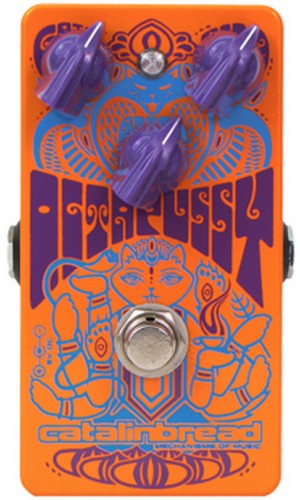
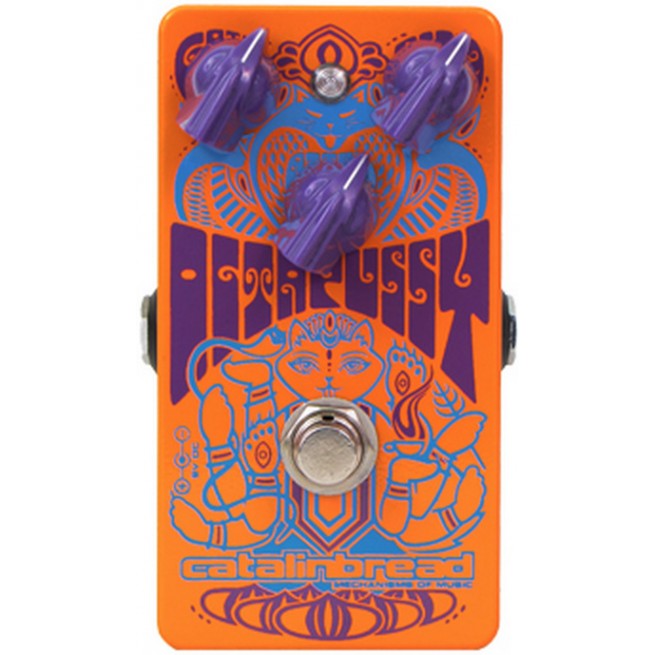
Catalinbread Octapussy
The Octapussy is essentially, an octave-up fuzz in the tradition of the Octavia. But it’s not a clone of that circuit! Nope, it’s an original circuit utilizing 3 silicon transistors and two diodes that takes the tradition to the next level! The preamp section is custom voiced to give you an extremely dynamic playing response. You’ll get those famous high-octave lead tones up high on the guitar neck but you’ll also get an amazing array of fuzz tones anywhere else on the neck - just by how you play it and how your GUITAR’s volume, tone, and pickup selector is set.
-
 Availability: Out Of Stock
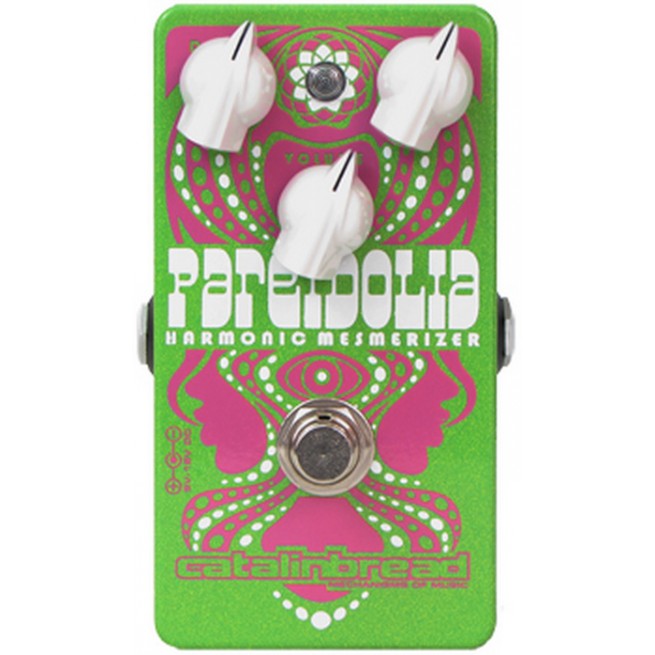
Catalinbread Pareidolia
The 1961 Fender Twin Amp... The Vibrato in this amp was actually more than Tremolo. I am not sure exactly what the effect should be called. Vibrato? Tremolo? Modulated dual filter? Phasor? Leo called it “vibrato” which isn’t technically correct. It is an amazing sound though!! Truly the “sinewave” Brownface tremolo sound, folks are looking for. We used this as the starting point adding a lot more range of speeds and much more depth.
-
 Availability: In Stock
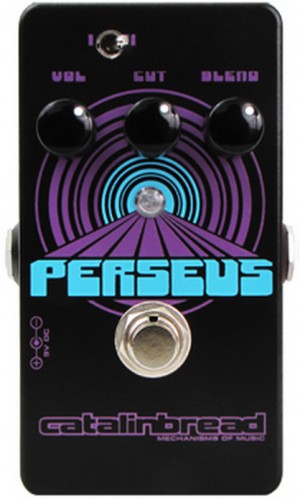
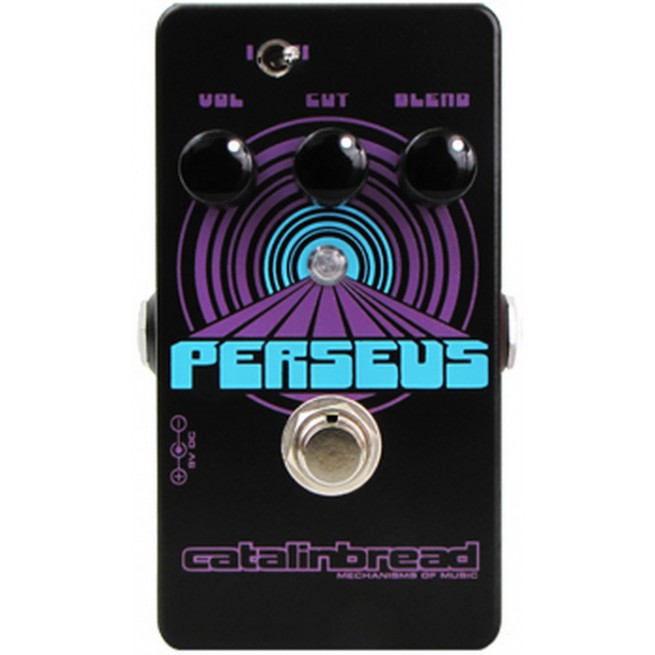
Catalinbread Perseus
Careful, the Perseus just might take your head off. While the mythology behind Perseus is certainly interesting, the Perseus sub-octave fuzz is actually named after the Perseus cluster, where the lowest note in the universe eminates from a black hole. What’s happening out there is that intergalactic gas has concentrated around a cluster of galaxies, forming a cloud. A massive black hole is sending out jets of particles that crash into the cloud, causing pressure waves to ripple outward. Some astronomers interpret these as sound waves. Of course, even if you call it sound, it’s too low for anyone to hear. They estimate the note to be a “B flat,” about fifty-seven octaves lower than middle C.
-
 Availability: Out Of Stock
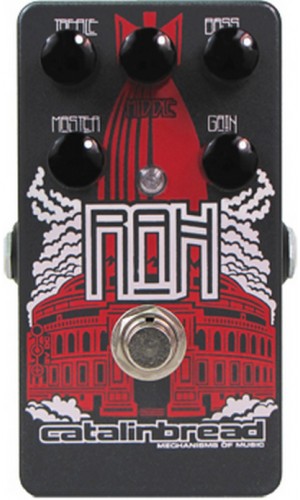
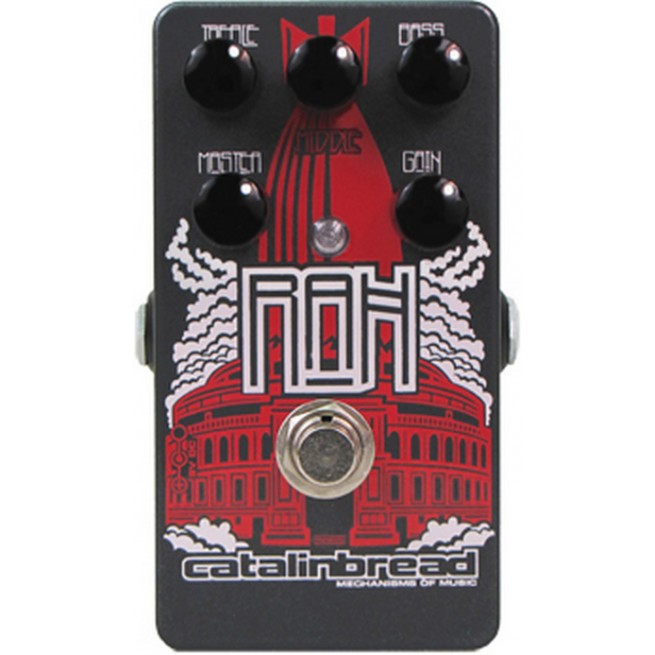
Catalinbread RAH
In January 1970 Led Zeppelin hit the stage of London's historic concert hall, Royal Albert Hall. At this performance Jimmy Page expressed himself masterfully with a broad pallet of tones and GIANT dynamic range. Of course this has a lot to do with Page's playing technique and Gibson Les Paul. His backline amps, custom Hiwatt heads into Marshall cabinets filled the entire hall with a cornucopia of colors at levels ranging from a mouse whisper to rave ups louder than a jumbo jet taking off only inches over your head.
At Catalinbread we love the RAH performance, but we hadn't considered the possibility of capturing it to put into a pedal… One day our friend Charlie got ahold of Catalinbread's chief circuit designer Howard Gee to ask if we could do it. Charlie said that he'd been trying to get this tone for years and told Howard, if anybody could do it would be Catalinbread. Having proven his ability to capture the essence and experience of famous amplifiers, Howard began experimenting with what is now the RAH.
-
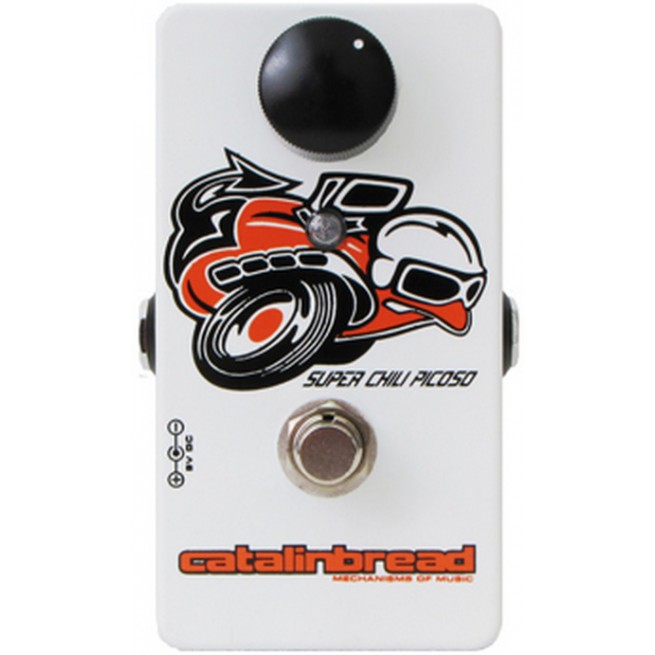
Catalinbread Super Chili Picoso
The Super Chili Picoso is a deceptively simple pedal that performs so many duties and solves so many problems that it is a must have in every self-respecting musicians’ arsenal. Let’s go through a number of these, shall we?!
- Buffer. Have a lot of pedals and/or long cable runs on stage? I don’t care how “low capacitance” your cables are, they are going to roll off high frequency detail and signal strength. The Super Chili Picoso’s high input impedance (something like 10M ohms) and ultra low output impedance (around 3K ohms) doesn’t let a drop of your tone escape. Just turn the big knob counter-clockwise and go! The Super Chili Picoso is your buffer!
- MORE! Ever finding yourself needing a clean, uncolored volume nudge? Say you have your fuzz set just right and need to make your entire soundstage louder? The Super Chili Picoso delivers from a few decibels to upward of 35dB unadulterated clean boost! (Provided any gear that you have down stream has headroom to spare.) The Super Chili Picoso is your MORE pedal!
- Overdriver. Ever want to push your slightly self-overdriven amp into a satisfying crunch at the click of a switch? Say you have a lower wattage amp (or you are lucky enough to play a big ole amp LOUDLY) on the edge of breakup and need push it even harder without messing with your amp’s overall character, the Super Chili Picoso is your overdriver!
- Balancer. Do you have an old Danelectro U2 with low output pickups and a Les Paul with hot humbuckers and have a tough time achieving an equal volume level between the two while maintaining the sonic qualities of the two instruments? Set the Super Chili Picoso’s knob to make up the difference! There we are, nice and balanced!
-
 Availability: Out Of Stock
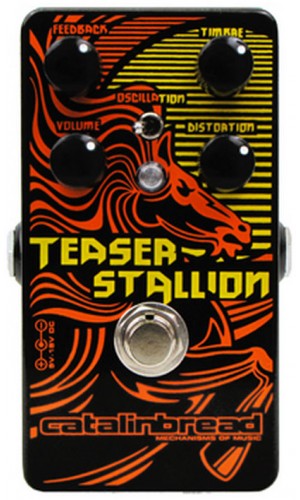
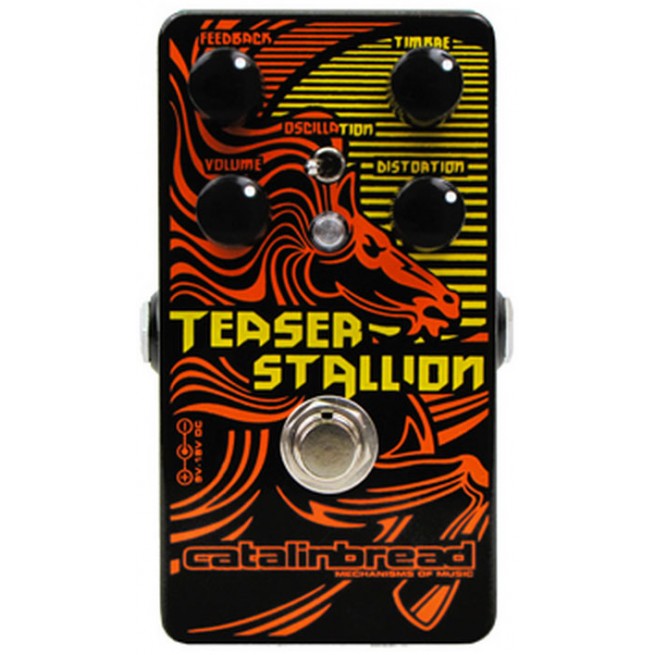
Catalinbread Teaser Stallion
The Catalinbread Teaser Stallion is an old distortion favorite capable of being a tame horse or a lust pent beast. With four controls and two modes, there's plenty of range for anyone, especially when the feedback loop is engaged, which also utilizes the volume and tone on your guitar into the sounds you're capable of making.
The Teaser Stallion has two modes. The first features dirt, ranging from mellow overdrive to blistering distortion. The timbre control allows for that distortion to be deep and gutteral or high and singing. Flip the toggle and the Teaser will start oscillating. The feedback loop thickens your tone, adds a unique texture to your sound, and even functions as a controllable synth. In oscillation mode the Feedback, Timbre, and Distortion controls, all govern the pitch and ferocity of the Teaser Stallion, but as an extension of this pedals agression, is also effected by the volume and tone controls on your guitar, as well as pick up selection, note bending, etc.
This pedal turns heads, offends traditionalists (and cats), but most importantly open doors to truely unique sounds and creative possibility.
-
 Availability: In Stock
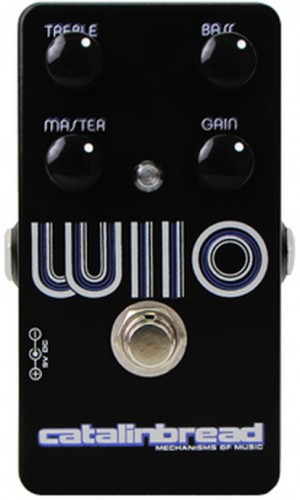
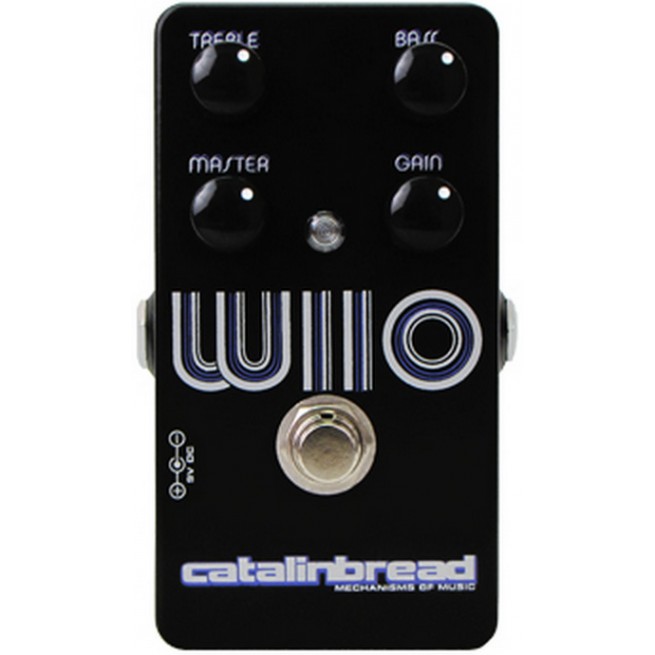
Catalinbread WIIO
Sheer raw power. Dynamics that feel like a roundhouse kick to the chest. Incredibly responsive clean up with the flick of the wrist. This is the WIIO.
The WIIO is an overdrive inspired by the powerfully unforgiving British amps from the ‘70s. Its all right there at your fingertips - your picking attack determines how much gain is delivered to the speakers. There is none of the typical compression found in most other overdrives to hide behind or to soften the blow - this is brass knuckle to the jaw type sonic impact we‘re talking here - you literally feel as though you plugged straight into the power section.
Like the amps, the WIIO has a wide freq spread so if your amp can deliver you’ll be rewarded with crisp clear highs and a very full tight low end. Lower gain settings are very clean and linear - you can hear every pick stroke and fingerprint, and the headroom allows for some very rich sounds when using modulation pedals. As you crank up the Gain the breakup is aggressive, powerful, punchy, and immediate then it decays quickly to a full clean sound. The midrange bark particular to the amps on which we based the WIIO is right there too as you crank it up. This pedal cuts like a broadsword so no need to fear being lost in the fray. It respects the integrity of your pickups, and loves being slammed with other overdrives or your favorite fuzz too.
© 2012 BNEFFECTS ALL RIGHTS RESERVED
TERMS AND CONDITIONS
CONTACT:
+62856 93495484 / +62812 95407407 / [email protected]
+62856 93495484 / +62812 95407407 / [email protected]